
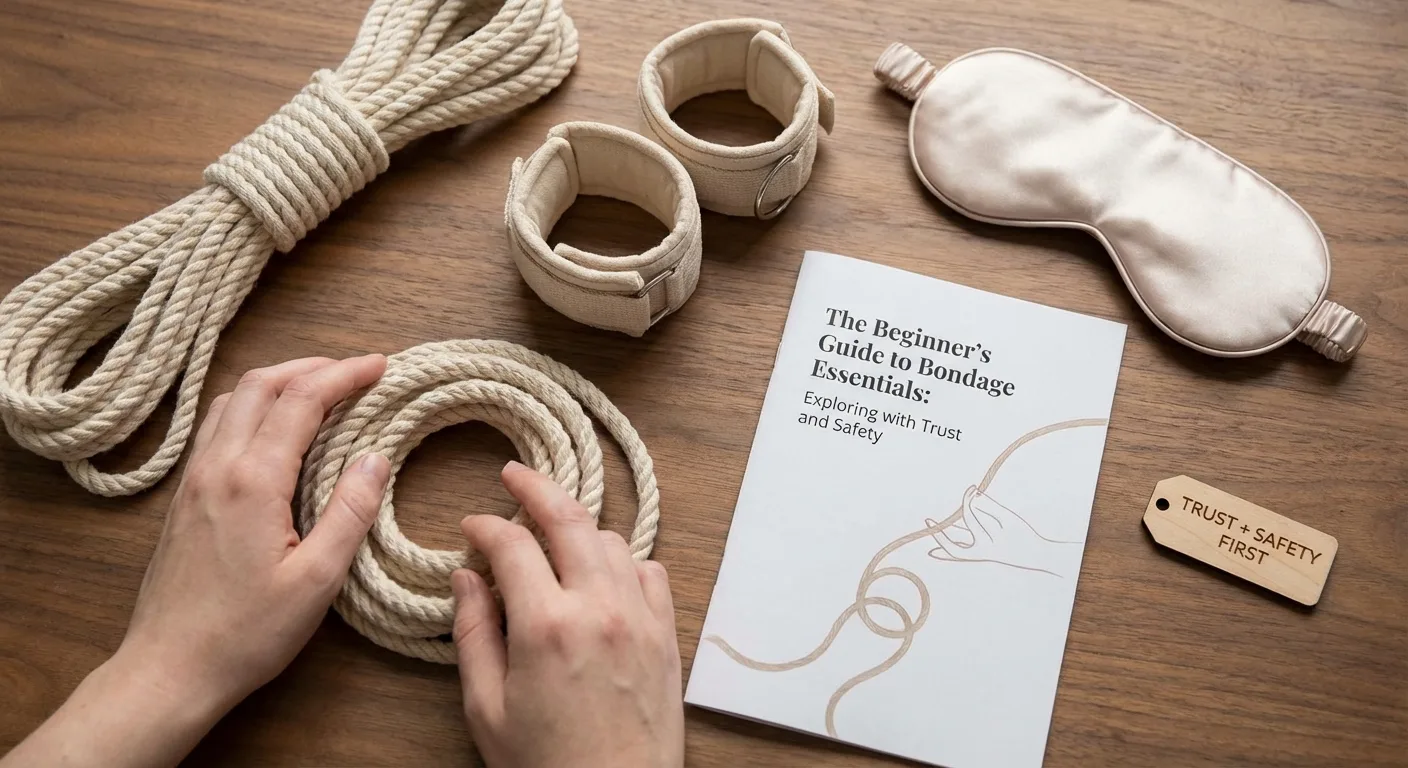
The Beginner’s Guide to Bondage Essentials: Exploring with Trust and Safety
At a Glance
- Bondage is primarily an exercise in trust and communication, not just physical restraint.
- The SSC (Safe, Sane, Consensual) and RACK (Risk-Aware Consensual Kink) frameworks are mandatory foundations.
- A “Traffic Light” safe word system is essential for clear, non-verbal communication during play.
- Beginners should start with soft restraints like Velcro or silk scarves before attempting rope.
- EMT shears must always be within arm’s reach to instantly cut materials in an emergency.
- Structured aftercare is required to regulate emotions and neurochemistry after a scene.
For many, the concept of bondage evokes images of complex knots and intimidating dungeons, but at its heart, this practice is a profound exploration of intimacy, trust, and surrender. As of January 2026, the conversation around kink has shifted significantly toward emotional wellness and safety, moving away from taboo and into the realm of healthy relationship exploration. Here at Twit2woo, we view bondage not merely as a physical act, but as a consensual power exchange that deepens the bond between partners. It is about creating a container of safety where one partner can let go of control, knowing they are held—literally and metaphorically—by the other.
Before purchasing a single piece of gear, it is critical to understand the ethical frameworks that govern safe play: SSC (Safe, Sane, Consensual) and RACK (Risk-Aware Consensual Kink). SSC emphasizes that activities should be safe for all parties, conducted in a sound state of mind, and fully consensual. However, many practitioners prefer RACK, which acknowledges that no physical activity is 100% risk-free. Instead, RACK focuses on informed consent, where all participants discuss potential risks beforehand and agree on how to mitigate them. According to the Kinsey Institute, clear communication regarding boundaries is the strongest predictor of positive outcomes in BDSM experiences. This mindset ensures that exploration remains a source of joy rather than anxiety.
The Foundation of Restraint: Communication and Consent
The most important tool in any bondage kit is not made of leather or rope; it is the voice. Effective negotiation begins long before the bedroom door closes. Partners must engage in an open dialogue about desires, hard limits (activities that are strictly off-limits), and soft limits (activities that may be explored cautiously). This negotiation builds the psychological safety net required for the vulnerable act of being restrained. Without this explicit verbal contract, the physiological stress response can override the pleasurable aspects of the experience, leading to panic rather than pleasure.
Once the scene begins, verbal communication may become difficult, especially if a partner is in a deep headspace often referred to as “subspace.” This is where the Traffic Light System becomes indispensable. This universal safety protocol uses three simple words: “Green” means everything is good and the intensity can continue or increase; “Yellow” signals caution, asking the partner to slow down, check in, or not increase intensity; “Red” is the absolute stop command. Upon hearing “Red,” all activity must cease immediately, and restraints should be removed. This system bypasses the ambiguity of phrases like “stop” or “no,” which might be used as part of a roleplay scenario.
Furthermore, non-verbal cues are equally vital, particularly if gags or heavy breath play are involved (though we recommend beginners avoid these initially). Establishing a physical signal, such as dropping a held object (like a stress ball) or a specific hand squeeze, ensures that communication lines remain open even when speech is restricted. Trust is the currency of bondage; if that trust is violated by ignoring a safe word, the emotional damage can be severe. It is the dominant partner’s responsibility to constantly monitor these signals, ensuring the submissive partner feels secure enough to surrender control.
To enhance the sensory experience during these moments of high trust, incorporating temperature play can be a thrilling addition. Products like Fleshlube Fire Warming Lubricant 100ml can introduce a gentle, warming sensation that heightens awareness without the need for complex equipment, allowing partners to focus on the interplay of restraint and sensation.
Curating Your Toolkit: Beginner Bondage Essentials
When assembling a beginner’s kit, the goal is to balance safety with aesthetic and functional appeal. The market is flooded with options, but here at Twit2woo, we recommend starting with items that are intuitive and easy to release.
- Blindfolds: Often overlooked, the blindfold is a powerful tool for sensory deprivation. By removing sight, the brain reallocates resources to touch and hearing, intensifying every caress and whisper. This creates an immediate power dynamic shift without physical restriction.
- Restraints:
- Velcro Cuffs: These are ideal for absolute beginners. They are soft, adjustable, and most importantly, allow for a quick release. If a panic response occurs, the submissive partner can often break free simply by pulling apart the velcro.
- Silk Scarves: For a softer, more romantic approach, silk scarves are excellent. They are gentle on the skin, won’t chafe, and can be tied loosely. They offer a psychological feeling of restraint without the rigidity of leather.
- Leather/Faux Leather: These offer a classic aesthetic and sturdiness. They provide a firmer hold than velcro but require buckles. Ensure you choose cuffs with soft lining to prevent nerve damage or circulation issues.
- Rope: While rope bondage (Shibari) is visually stunning, it is a “Level 2” skill. Beginners should use soft cotton or bamboo rope, which has less friction burn risk than jute or hemp. Warning: Never tie rope around the neck, and avoid complex suspension ties until you have learned proper anatomy and knot safety to avoid nerve compression.
Regardless of the restraint type, friction and chafing are real concerns when movement is restricted. Keeping the skin protected and comfortable is paramount. We recommend keeping a high-quality lubricant like Fleshlight Waterbased Fleshlube 250ml nearby. Its water-based formula is safe for use with all toy materials and ensures that any intimate contact remains smooth and pleasurable, preventing the distraction of discomfort from breaking the immersion of the scene.
The Safety Protocol: Risk Management and Aftercare
Safety in bondage extends far beyond the safe word. The physical risks of restraint—specifically nerve damage and circulation loss—are serious and must be managed proactively. The single most critical item in any bondage collection is a pair of EMT shears (medical safety scissors). These are designed to cut through leather, rope, and clothing instantly without cutting the skin. If a knot jams or a partner experiences a medical emergency, you cannot rely on untying; you must be able to cut them free in seconds. Keep these shears visible and within arm’s reach at all times.
Circulation checks should be performed regularly, roughly every 10 to 15 minutes. This involves checking the extremities (hands or feet) for warmth, color, and sensation. A simple test is to press a finger into the partner’s nail bed; the color should return to pink immediately upon release. If the extremities feel cold, turn blue, or the partner reports tingling/numbness, remove the restraints immediately. According to medical guidelines from the Mayo Clinic, prolonged compression of nerves can lead to temporary or permanent neuropathy, known commonly as “Saturday Night Palsy.”
Finally, the scene does not end when the restraints come off. Aftercare is the mandatory period of re-grounding that follows a BDSM session. During intense play, the brain releases a cocktail of endorphins and adrenaline. When this drops, partners can experience “sub drop,” a sudden crash in mood characterized by sadness or anxiety. Aftercare mitigates this through physical comfort (cuddling, blankets), hydration, and sweet snacks to restore blood sugar. It is a time for emotional check-ins, reassuring your partner of their safety and your affection. This practice solidifies the trust that allowed the bondage to happen in the first place.

Conclusion
Exploring bondage is a journey of mutual discovery. By prioritizing communication, investing in safe beginner gear, and adhering to strict safety protocols, couples can unlock new dimensions of intimacy. Remember, the tightness of the knot matters far less than the strength of the trust between you. Take it slow, listen to your partner, and enjoy the exploration.
What People Ask
Yes, bondage is safe for beginners provided they adhere to the SSC (Safe, Sane, Consensual) framework. Starting with light restraints like velcro cuffs or scarves and establishing a clear safe word significantly reduces physical and emotional risks.


About author